It’s “Look at the Roof” Season!
How to Build a Vented Attic without Ice Dams
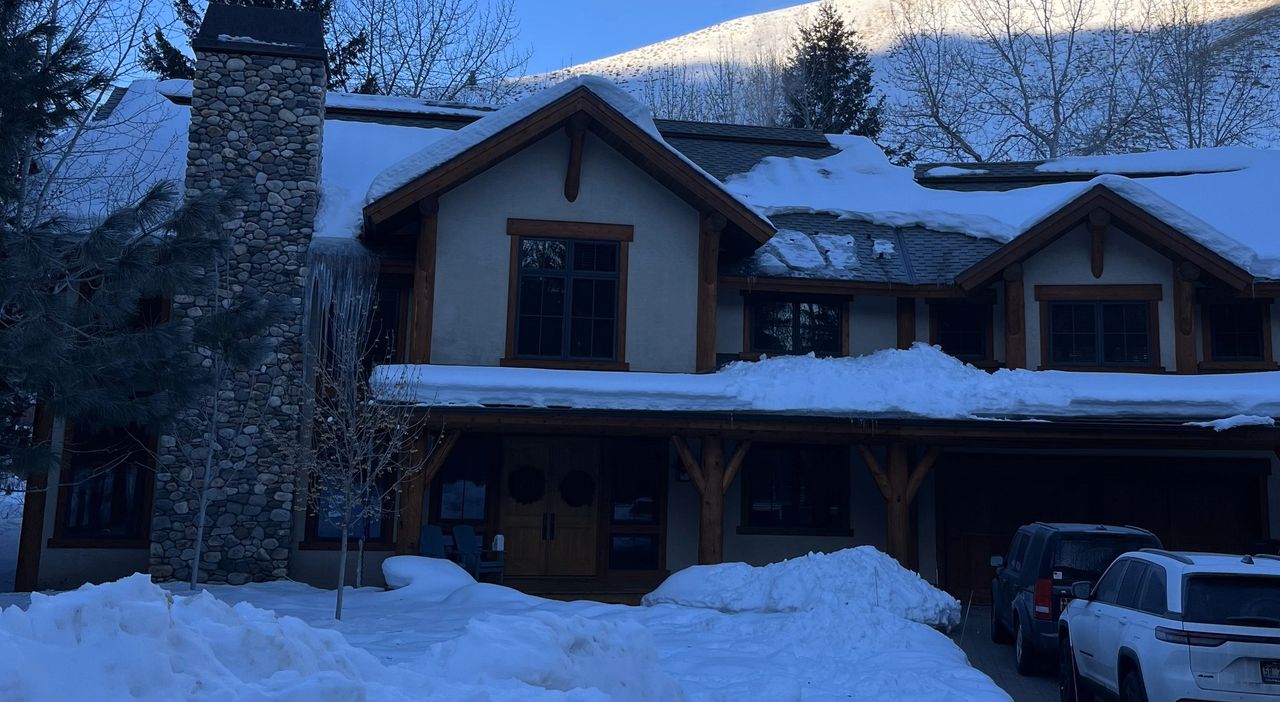
My kid asked me recently, “Why are you always looking at roofs, Dad?” Honestly, I can’t help it. A snow-covered roof is like an infrared picture in real time. It’s an insulation inspection from street view. Do you see it too? Can you drive by the Bigwood cemetery building without seeing that hot spot? I can’t.
I receive a phone-call per week from a homeowner asking me to fix their ice dams, even during this piddly winter. Ice dams are a gift that keeps on giving, so WHY isn’t ice-dam avoidance a top priority when building a new home? Is there anything so cringe-worthy as heat tape on a new build?
I’m mostly talking about vented attics in this post – it turns out a vented attic can work exceptionally well – they are low cost, easy to build and insulate, and make remodeling easy. Unfortunately, we still build them like it’s 1980 and the homeowner has to deal with it…forever.
There’s a recipe for success and it looks like this:
1) No heat sources in the attic
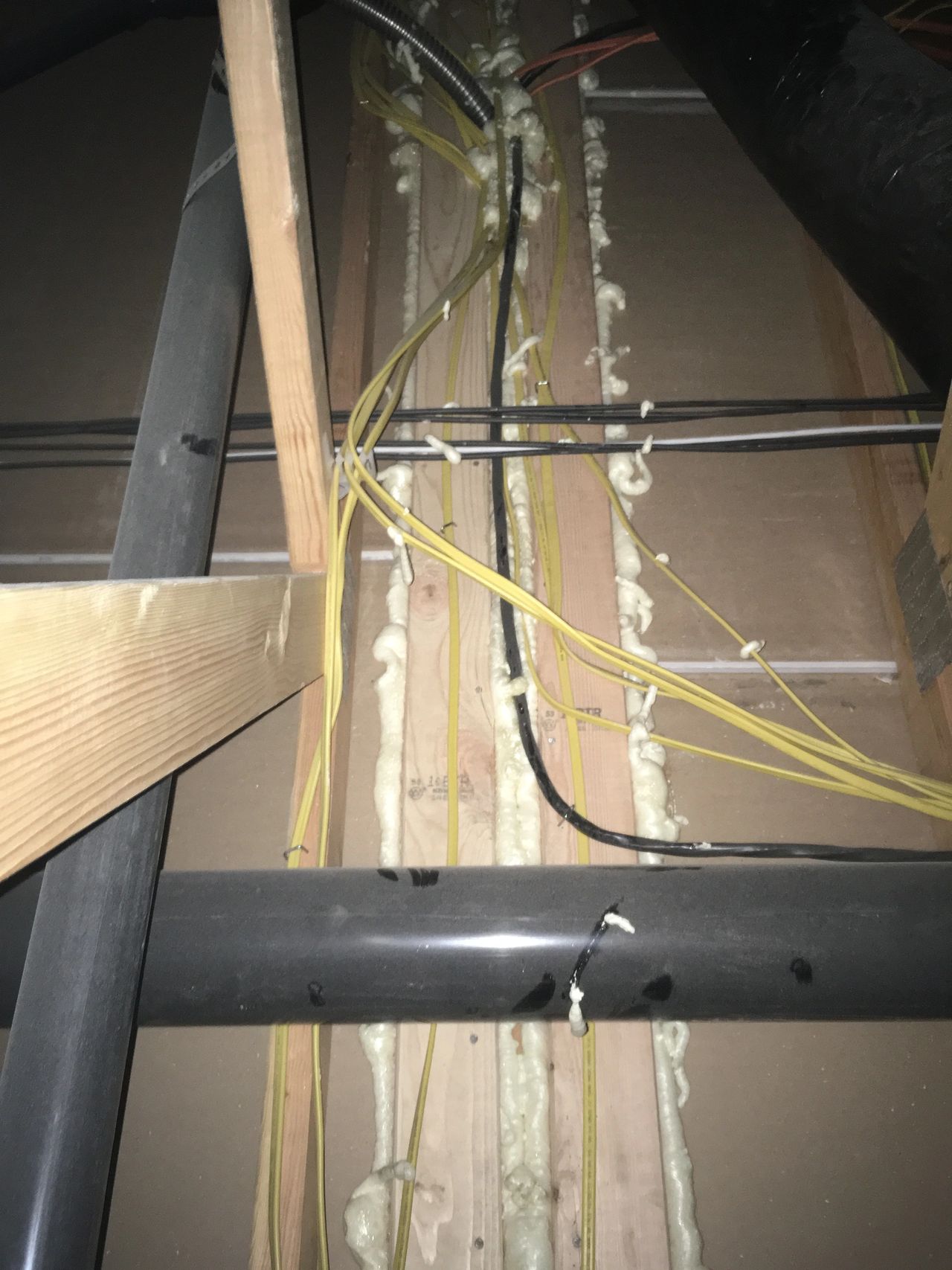
No furnaces, no supply ducts, no unsealed can lights. I’m open to a well insulated and air-sealed return duct if you must, but I typically find the duct boot still uninsulated and a big gap between the ceiling drywall and the duct register.
2) Provide a continuous air-barrier between the home and the attic
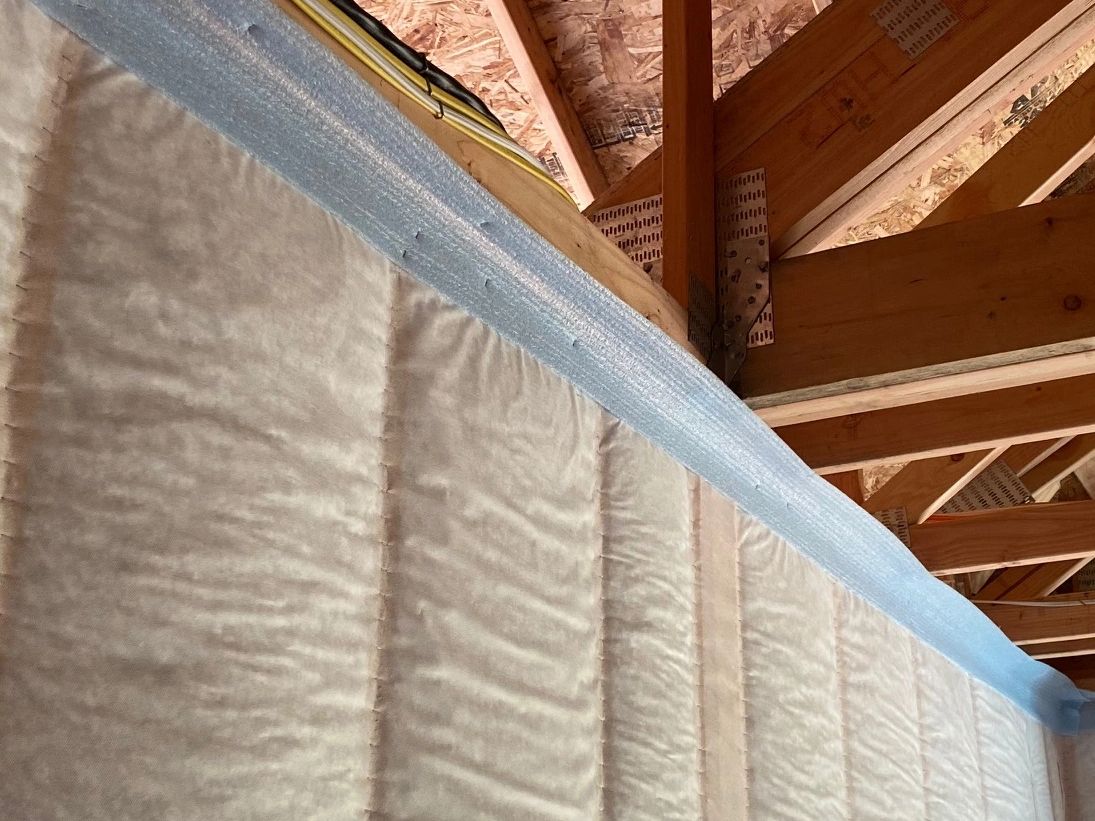
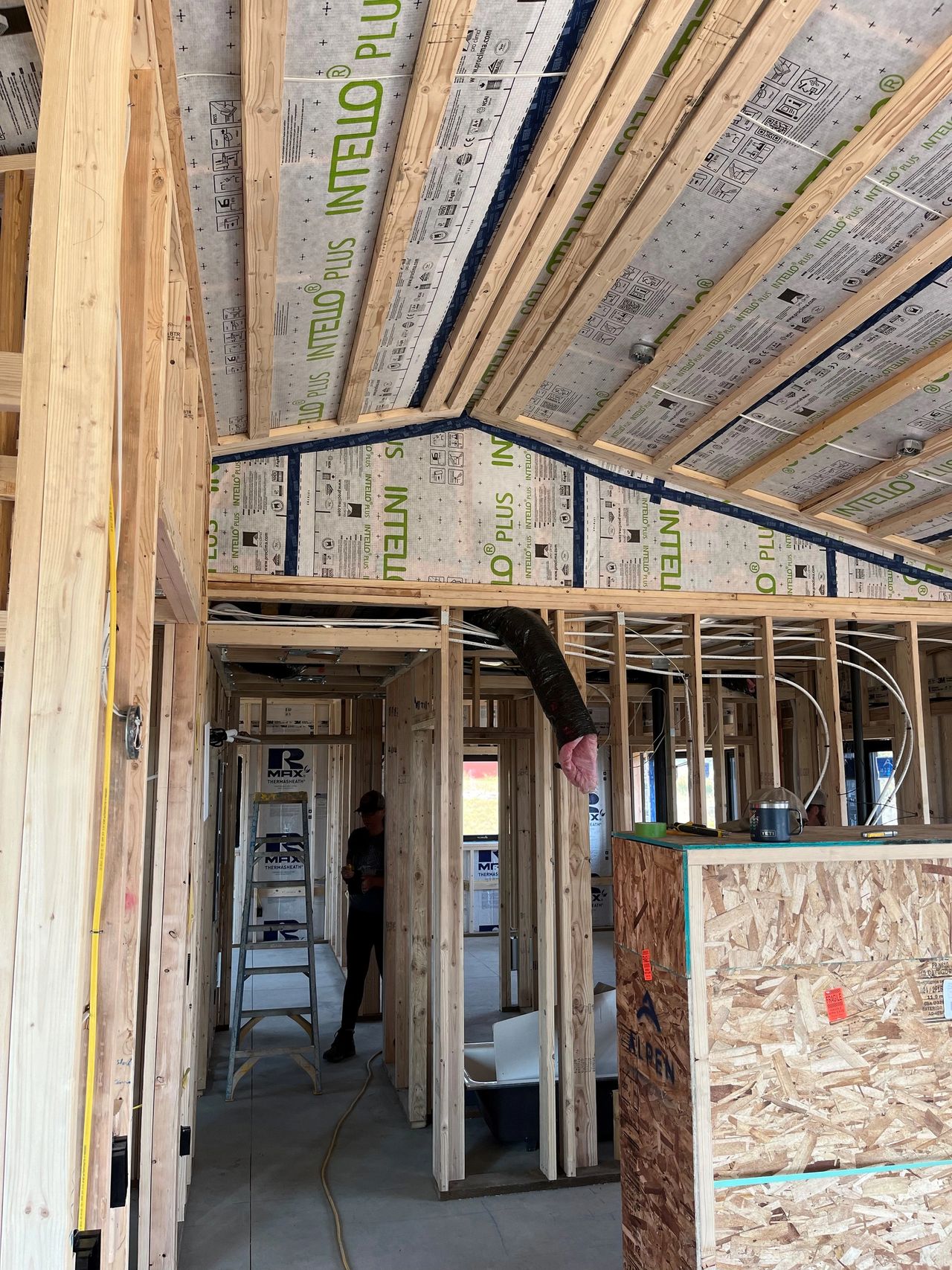
Maybe 8 homes in the Wood River Valley have a continuous air barrier…and guess what…their roofs are impeccable! A continuous air barrier goes over the interior partition walls. Yes! You can do this! In most cases it’s not necessary to fur down a chase for lights…as long as you seal between the drywall and the light housing. We’ve seen both OSB and air-barrier fabrics like Intello Plus used for this application.
3) 18″ Energy Heel
An “energy heel” is a “raised heel truss.” Notably, it has some extra space where the truss lands on the exterior wall to leave room for insulation and ventilation. 18″ is the minimum to get R 49 fiberglass or cellulose insulation, plus 2″ of ventilation. You can do less if you commit to spray foam in the heel. The code has an allowance for R-38 in the heel, but I’m not here to tell you to do dumb stuff.
4) Ventilate like you mean it
I’m a huge fan of gable-end vents because they work all winter long. Be sure to screen them to keep bugs, birds, and forest fire embers out! I have no faith in those roofing-product ridge vents. Their net free area is poor, not to mention they are buried under snow when we need them most! If you hate gable-end vents, then commit to building a framed boston roof vent (see google). Screen your eave vents too and cut holes or notches in the truss blocks up near the roof deck – not the center of the block!
5) Insulate for success
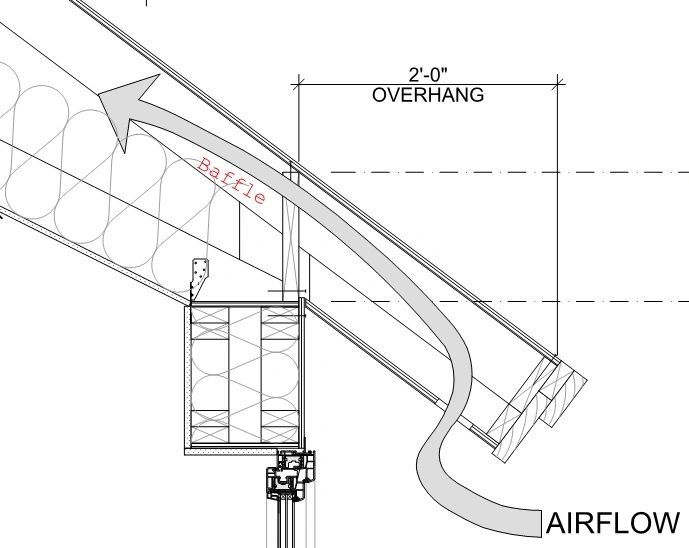
Install ventilation baffles 2″ off the roof deck BEFORE your continuous air barrier. Add a boardwalk down the center of the attic. If you don’t your insulation will be trampled down before the house is even finished! Then insulate to R-50. I prefer blown cellulose but that’s a conversation for another blog.
6) Extra Tips
a. Roofs below a 3:12 pitch shouldn’t have traditional vented attics. If an insulation contractor can’t walk through the attic to blow insulation, it’s time for a new approach. The same is true for a seriously hipped roof – there’s no gable-end for a vent, and there’s limited room for a ridge vent.
b. If you can’t commit to a continuous air barrier (aka can’t commit to spending $500 on a $1m build) then you can attempt to air-seal from below and above. Install sill-seal along the top plates to make a gasket for the drywall and then climb into the attic and foam along the partition walls. It’s equally labor intensive, but as least it doesn’t work as well!
c. If you can afford granite countertops, you can afford an attic hatch that is better than a scrap of drywall with a fiberglass batt (laying off to the side of the attic hatch). My preference is actually an exterior attic entrance. I put hinges on a gable-end vent but I’ve seen little trap doors too! If this doesn’t work, consider buying an insulated attic hatch product, for build a gasketed, insulated attic hatch yourself with locking clamps to pull it shut tight! No sure how? Ask the internet…you don’t have to invent this one.